Friday, December 1, 2023
RC Wilson reviews Katie Daley's new book, Any Closer to Home
Sunday, August 19, 2018
Four Ohio Poets
Invisible Fish featured nature poems, interspersed with several poems that dealt with the narrator’s childhood in the land of “polished cotton pinafores, church bonnets, shiny shoes with bows, Friday night bingo”— laid out most explicitly in “From the Land of Stuffed Mangoes.” “Invisible Fish”, the title poem, was amusing and insightful, a nostalgic defense of naïveté and imagination against a world that laughs with those who fool you. Threaded through the book are poems about a darker side of the same upbringing, a tale of escaping from a cycle of family abuse and small-town oppression. Near the end, the prose-poem “Miss Carlton” is a poignant view of the other side, a brief slice of life of an inconsequential encounter in a grocery checkout line. One comment, though is that in my opinion, one dead animal poem would have been enough.
- Glassmeyer is interviewed about Invisible Fish here: http://ohiopoetryassn.blogspot.com/2018/10/casting-line-for-susan-glassmeyers.html
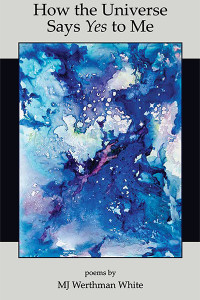
How the Universe Says Yes to Me is a short book with a lighter take on the subject. A handful of the poems are simple list poems (most amusingly “Lies I’ve Told”), inviting the reader to draw the lines between the items. It has a few very amusing poems where the universe itself is personified, including the title poem, and “The Universe Speaks,” in which the ways of the universe are hard to understand: I found these whimsical, somewhat surrealistic, and quite charming. Some of the poems are historical— “Tycho Brahe’s moose,” for example, is about a real moose that the astronomer Tycho Brahe really brought to parties; “For Alex, the African Grey Parrot” is an elegy for the death of the celebrated parrot of animal psychologist Irene Pepperberg, feaured (among other places) in Scientific American.
500 Cleveland Haiku, Michael Ceraolo, Writing Knights Press 2018 (https://writingknightspress.blogspot.com)I have to admit to some degree of envy that Michael Ceraolo published this one first, since back in 2011, I published on the web my own haiku series, "52 Cleveland Haiku," with one Cleveland haiku for each week through the year (find it here, here, and here.). So, Michael goes there and a few hundred more. His haiku (not to mention senryu, zappai, and various other 'ku forms) span the range from observations of the cityscape, to cynical observations about people and politics, very often focussing on observation of the many ways in which Cleveland is a very different city for the rich than for poor. He winds his way through the seasons of the city, watching with alternating compassion, passion, and scorn, celebrating the cracked concrete and the ice-covered lake equally.
Michael Ceraolo is from Cleveland, OH
Friday, May 17, 2013
Some Amazing reviews
A couple of Cleveland poets who write poetry toward the speculative direction in the geography of poetry have recently gotten reviews from Diane Severson in Amazing Stories. Cleveland's haiku master Joshua Gage's new chapbook, Inhuman: Haiku from the Zombie Apocalypse (OR Inhuman: Zombie Haiku in Four Acts) (just out from The Poet’s Haven, as No. 18 in the Poet’s Haven Author Series) was reviewed in the most recent issue. Diane writes:
"This is a volume to enjoy as a brief diversion on a stormy night and also to pull out each October in preparation for Hallowe’en."
At six dollars for a copy, it's a bargain for any poetry fans with an interest in haiku, or in horror. And it's not too early to start thinking of gifts to give your friends and family for World Zombie day!And Mary Turzillo's book Lovers and Killers (which has been mentioned here before) also rated a good review from Diane in the April Amazing:
"I really like Mary Turzillo’s writing style. It’s less formal than many poets in her syntax and word choices, which makes it easy to read. It’s a book that could be ripped through, it’s so easy to read, but its many-layered nature benefits from a bit more leisure."
Monday, December 14, 2009
Intrinsic Cinquains
Some of the Cleveland-area speculative poets have been experimenting with the cinquain, a short poetic form similar in some ways to the haiku.
More complicated cinquain forms, like the mirror cinquain, butterfly cinquain, and so on (which Jim and Josh also use), build on the basic 2-4-6-8-2 structure.
Of the poems in Intrinsic Night, in the Simmons' Voice reviewer Stefanie Maclin wrote:
Wednesday, November 25, 2009
Chapbook Review: "Demon Lovers and Other Difficulties" by Nicole Kornher-Stace
Wednesday, September 23, 2009
Book Review: Towards Absolute Zero by Karen L. Newman

Toward Absolute Zero
By Karen L. Newman
$6.00, Sam’s Dot Publishing
www.samsdotpublishing.com
Karen L. Newman has an MS in chemistry which has contributed greatly to her writing in addition to working a variety of jobs in academic, industry and government. She lives in Kentucky where her cat, Tri-Paw, helps her write occasionally. Her work has been nominated for both a Rhysling and a Dwarf Star Award. She edits the online magazine Afterburn SF and Illumen, Sam’s Dot Publishing’s magazine of speculative poetry. Her most recent collection is Towards Absolute Zero.
Speculative purists may balk at many of the poems in this book which are not truly speculative. Instead of pondering speculative situations, Newman instead creates metaphors using speculative tropes as the vehicles to describe non-speculative ideas. Thus, in the poem “Blue Vapor,” cigarettes and their smoke become “a mystic genie appearing/from a battered bottle/that has been tossed about the sea.” In the piece “Living Dead Girl,” a young lady who is “friendless/loveless/dreamless” imagines her emotions as ghosts “haunting the cemetery of her mind,” which is “buried in a decaying heart.” This use of speculative tropes, though not unique, certainly adds a dark horror to otherwise common people and ideas, and creates a resonant juxtaposition of these poems against the others in the book.
The other poems of this collection are quite speculative. For example, in “Frankenstein’s Monsters of Tomorrow,” Newman carries the idea of plastic surgery one step further, where people who have already received “enhanced breasts,/clipped flesh wings,/tucked tummies, respun varicose veins” now begin to receive other augmentations from “unwilling donors,” to horrifying allegorical results. “The Sands of Kentucky” imagines a future in which Kentucky has become beachfront property after “powerful men/polluted the sky with smokestacks” and “the second flooding came/from creeping icecaps.” Even this future is dark, though, as the narrator discovers not shells on the beach, but a piece of coal, and the sounds it makes are not those of the ocean.
Using her degree in chemistry, Karen L. Newman has concocted some explosive poetry. From one-night stands to breakfasts after Tiffany's, from little red churches to Titanic survivors, Newman lights the speculative fuse to our human and social foibles and rearranges our molecules.
(Published in Star*Line, July/August 2009)
Saturday, June 13, 2009
Book Review: "Separate Destinations" by Kendall Evans and David C. Kopaska-Merkel
David C. Kopaska-Merkel is the editor and publisher of Dreams and Nightmares magazine, and was for six years the editor of Star*Line, the journal of the Science Fiction Poetry Association. Fourteen previous chapbooks and hundreds of poems and short stories have been published in dozens of venues since the early 1980s. David lives in Tuscaloosa, Alabama, with 2 artists, 3 cats, 1 dog, 2 bunnies, and thousands of books.
The two poets recently published a collaborative chapbook titled "Separate Destinations" on D+66 Books. It is a collection of surreal science fiction poems, most of which carry a dark undertone, if not clear horrific intentions.
What most readers look for in a collaborative book is one of two things. Either the poets enter into a back and forth conversation, where each voice is firmly establish as separate from the other, or that the two voices are inseparable, and the work stands as a complete whole. This later style is what Kopaska-Merkl and Evans aim for, and acheive. This sort of intense collaboration can produce a unique voice, distinct from the voice of either individual poet, and as no one voice stands out as stronger than the other in these poems, and this book could easily be read as the work of one poet instead of two, the collaboration is complete and successful.
The poems themselves vary in success. Where the images and lines are strong, they clearly work, despite the surreal combination of images piled against each other, such as:
"Mice jump,
and maybe they’ve jumped all the way
out of this moment, this picture,
into the gullets of feral cats,
into the pages of photocopied pamphlets,
into the all-devouring storm of yesterday"
from the poem "VARIATIONS ON THE SONGS OF SERAPHIM DOWNLOADED TO A HYBRID MEDIUM," or the more straight forward
"She rolls over and her lips find mine,
her arms my neck, just as if she were
someone real like myself,
but I could trace her name on an eroded tombstone
adrift in autumn leaves that don’t recall her name.
So little of her world remains in our time."
from "PARCHMENT FOUND IN AN ANTIQUE BOOK".
However, many of the poems and lines in the book slipped from these strong images, giving readers the abstract
"My heart asks when I can return to you,
but, alas, my head has no answer:
I am no closer to finding what I came here to
recover, and already
I think in this archaic tongue
(which lacks words for the proper thoughts)
more readily than our own."
also from "PARCHMENT FOUND IN AN ANTIQUE BOOK," or the heavily scientific
"There’s a constellation of computer chips
Surgically implanted at the base of the skull,
Augmenting intelligence and speed."
from the poem "WALKING THE DOG," which ends with the silliness of
"Bathed in the catalytic rays of the Dog Star –
This is one Sirius canine."
When these poems work, they work well, and the voices and narratives are intriguing, from "OF TIME AND THE TEETH OF THE BLACK DOG" in which the narrator assembles the bones of his sister into a door into the realm of "the Black Dog," a bell jar which stands as a metaphor for the readers sense of self-confinement, alienation, even antagonistic madness, to "REEFS," which explores the dreams of voyagers beneath alien stars, in which the sources of evolution is questioned and reexamined, to the title poem, "SEPARATE DESTINATIONS," which explores the lives of two clones, one lamenting and question the death of the other after they both have been exposed to the magnificent beauty and horror of the universe. However, many of the poems are a bit rough around the edges, with shaky lines, abstract or cliche images, and even some iffy line breaks, marking this as an interesting, but uneven, read.
Wednesday, May 27, 2009
Ordinary Genius - A Guide for the Poet Within
Poet Kim Addonizio has a new bookMonday, February 23, 2009
Book Review: The Memory Palace by JoSelle Vanderhooft
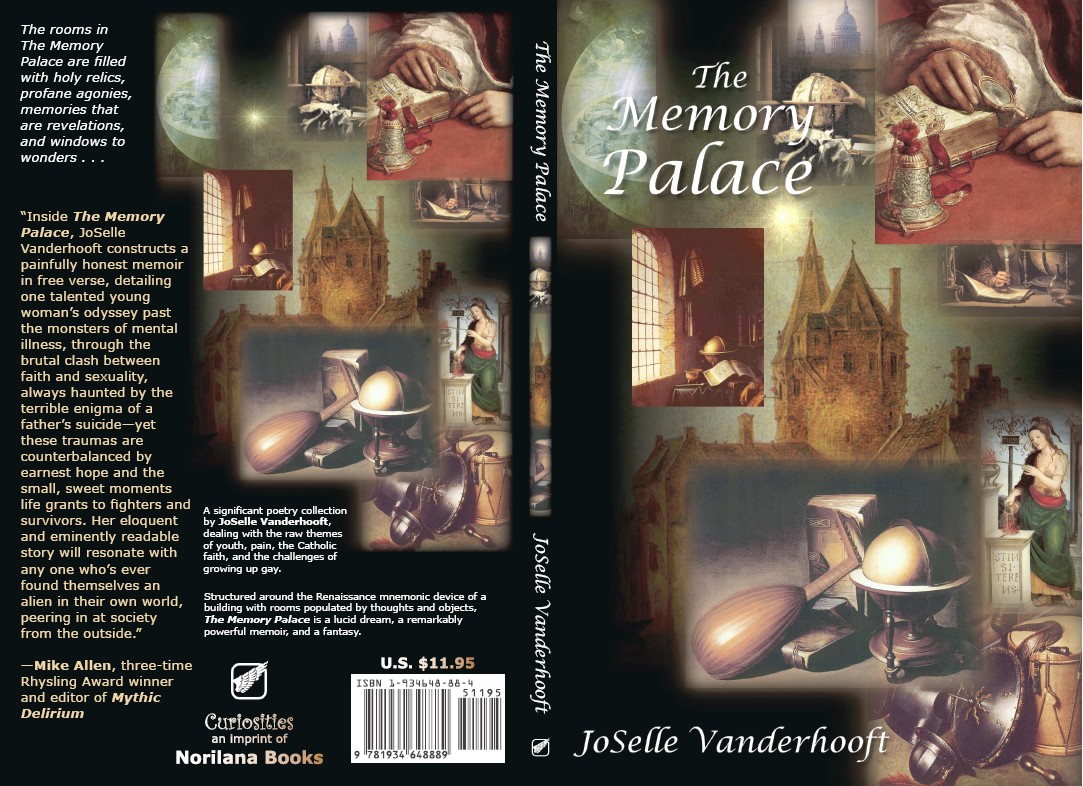
JoSelle Vanderhooft is the critically acclaimed author of poetry collections The Minotaur's Last Letter To His Mother (Ash Phoenix), the 2007 Stoker Award-nominated Ossuary (Sam's Dot Publishing), Desert Songs (Cross-Cultural Communications, forthcoming), The Handless Maiden and Other Tales Twice Told (Sam's Dot Publishing, 2008), Fathers, Daughters, Ghosts And Monsters (VanZeno Press, forthcoming) and Death Masks (Papaveria Press, 2009), the novels The Tale Of The Miller's Daughter (Papaveria Press) and Owl Skin (Papaveria Press, forthcoming) and Ugly Things, a collection of short stories from Drollerie Press to be released in 2009. She is currently at work on a series of novels for Drollerie press as well. Her poetry and fiction has appeared online and in print in a number of publications, including Cabinet des Fees, Star*Line, Mythic Delirium, MYTHIC, Jabberwocky, Helix, The Seventh Quarry and several others. An assistant editor of a gay and lesbian newspaper by day, she lives in Salt Lake City, Utah.Vanderhooft's most recent poetry collection is The Memory Palace (A Poetry Memoir) which is available on Norilana Books as part of its Curiosities imprint. As the title indicates, this book is a series of poems through Vanderhooft's memories, pulling the reader through the experience of growing up gay. This is a dense book, in terms of emotion, and one that takes time to ingest. The poems are powerful, raw and at times, even scary. The feelings and images are layered and compacted, and the reader often feels helpless before them. However, this seeming chaos is expertly controlled by Vanderhooft allowing the reader to experience young adulthood. Emotionally, this is not an easy book to read; however, Vanderhooft is able to craft her poems through that emotion so that the reader is carried along for the ride.
The book begins with the section "Foundations," which explores adolescence and young adulthood through the eyes of a young girl beginning to acknowledge her desires, a non-Mormon moved to Utah, a young woman dealing with oppression, and a daughter dealing with a tumultuous family. These poems are at times innocent, confessional and downright terrifying. For example, "Blankets" uses the imagery of grandparent's afghans to create a bubble of safety for explorations into sexuality:
"It’s that awkward-gooeyness that feels
both wrong and right,
that makes my heart slow down
even as my breath speeds up.
Deep down, I understand it.
Deeper still, I know I probably don’t want to.
Instead I want to pin this moment
like wings in amber,
a monarch butterfly frozen in its footstep.
Let the world ramble on as it will.
I will transform into a patchwork blanket,
at once a shield and a mnemonic killing jar
in this perfect bubble of morning."
However, poems like "My Father's House" are much more foreboding. It begins "Your house is hungry, Father./At night I hear its old bones/shift beneath me like Leviathan/breathing out a nightmare." and proceeds through the experience of young girl, scared at night, dealing with a non-responsive father who calls her "a fucking baby/for looking into shadows/to see bones." The house, with her father and his new wife, almost consumes the young girl in this piece, swallowing the reader as well.
Poems like "You Know Who You Are" are even more terrifying, documenting the cruelties that children commit against each other and way adults refuse to act against such acts:
"I have been told I must get over it,
the glee with which two pre-pubescent boys
bruised my breasts in an open classroom.
I must let it go, they say,
because it happened back in 1988
and at least I wasn’t raped.
Yet every time I saw one of them prowl
through the corridors, seventh grade to senior year,
the rope coiled in my belly
jerked me into the girls’ room to hurl.
Back then his mother forced him to say sorry."
The next section of the book, "Walls," carries the reader through high school--an anti-religious father, his suicide, the awkwardness of being in love, and the pain of losing love.
Poems like "Break Up" capture the loss eloquently:
"It’s like I have been shot in the same place.
This time the wound spreads across a summer,
my guts twist like shedding serpents
and someone I don’t know
lives in my body."
Poems like "Inquisition" bring up the confusion and terror of a daughter caught in her father's anti-Catholic tirade:
"When I think it’s peace time, that we can
discuss his brass model trains,
the tedium of seventh grade made worse
for gropes and death threats I’m scared to confess
he’ll give the screws a turn:
“You attend a church that financed the Crusades!”
I wonder why he brings this bogey up.
I’ve read the books, I’m smart enough to know
Father Sebastian will not exhort
the torching of the synagogues tomorrow.
But he persists until I nearly drop the phone.
Later, I wonder, if the tears he drew
were some proof of heresy."
Readers are swept up in this flurry of emotions, caught themselves in place of memory, reliving the joys and horrors of high school. Vanderhooft does not let go of her own story, however, and allows readers into the questions confronting a young woman who must constantly confront the demon of her dead father:
"I wonder, through the rain, what he would have said.
Would he have liked my speech,
or would he have shaken his head
condemning it and more accomplishments
as so much trash?"
However, Vanderhooft does not drown her audience completely. Despite suicide, cruelty, questions of sexuality, battles with mental disorders, poems like "Quo Vadis" take the reader through the turmoil, and offer brief slivers of hope:
"His voice is rose petal-soft as he lays out
three things, each round and real as rosary beads:
you’re welcome here, don’t leave us;
God would not try to break you on the world;
finally, as gently as he can
the teachings of the Catholic Church.
I hear the words disorder and desire
flail, mouth open, airless, but he stops,
strings them out like beads upon a chain
in sentences I can close my hand around.
Not as God intended, but not sin.
yet if I am to take a female partner,
few priests will put me to the Inquisition,
no crowbars raised to pry apart my skull
no eyes to stare into that well of conscience
where God echoes like water."
The third section, "Windows," continues that hopefulness. However, even this hope and recovery are painful, as explored in "To Forgive":
"Forgiveness is not generous.
It is not something granted by the proud,
not something given freely as a kiss.
Instead, it is an act of desperation,
the final rallying of sour passion
before bones collapse on their own weariness.
This is why I nod at his announcement
blood biting through the pucker of my lip
as I let it go."
Even more painful is the isolation one feels in the poem "Via Cruces," in which Vanderhooft comes to terms with her sexuality and contradictory teachings of the Catholic church:
"I ask every priest I know for their advice.
One of them, a stone-faced Latvian
tells me God did not make girls for girls,
and he once drove out a demon from a house
where two women embraced.
I leave, of course, in tears.
My friend Stephen calls it spiritual rape.
My mother says she never should have brought me
to the church that hurt her in her youth.
As for me, I feel I have been skinned."
However, this poem signals a change towards revelation and acceptance, providing the reader with a much needed breath in the journey through pain and anxiety:
"Today it is Good Friday,
the final Stations of the Cross for Lent.
I have processed around the church,
prayed before each icon and remembered
every sacrifice we make in love.
The censer’s smoke curls up to the rooftops
bearing with it my uncertainty
and, for a time, my fear."
The narrator continues through these moments of acceptance, acknowledging people from her past, and learning to grow beyond the injuries she has endured in her life. For example, in the poem "Flesh and Spirit," Vanderhooft explores her body, and learns to accept what she finds there:
"Arms I have just found encircle me
soft as petals, hard as diamonds at their core
to protect me from the world that peers through the blinds
fanged and hungry,
always on alert."
In the final section, "Rooftops," Vanderhooft fully acknowledges herself to herself and her readers in the revitalizing and honest "Apologia":
"Being Catholic and bisexual isn’t always easy.
Sometimes Catholics think that you’re a threat
to Mother Church, to mental health, to marriage.
After all, aren’t we criticized enough
for Purgatory and praying to the saints?
Better just to speak of them in whispers,
half-lidded eyes dividing them like grain.
Unless, of course, they make a point of it
leaving us no choice.
Sometimes bisexuals think that you’re a traitor,
to gay rights, to equality, to self-esteem.
After all, aren’t we criticized enough
for not making up our minds and being greedy?
Better just to speak of them in whispers,
half-lidded eyes dividing them like grain.
Unless, of course, they make a point of it
leaving us no choice.
I guess it’s nice when they agree on something.
I am not an ideal Catholic,
not the kind who should be introduced
to impressionable children and RCIA candidates.
I’m not even a good Catholic.
I swear like a parrot, pray like a thief,
miss church without a reason
good or otherwise.
I am not proud of it.
I am not an ideal bisexual,
not the kind who should be introduced
to skeptical gay leaders and nervous politicians.
I’m not even a good bisexual.
I hide like a turtle, scatter like a beetle,
call myself a lesbian to avoid
a confrontation.
I’m not proud of that, either.
Neither am I happy with that greasy tightrope
between the opposition of our lives:
bisexual and Catholic,
sick and well,
happy and unhappy,
dead and alive.
If it were up to me, I’d tear it down,
let us free-fall and flail in contradiction for awhile,
too scared, too hopeful to search for the net,
maybe not wanting one."
Vanderhooft also revisits many of the previous poems, illuminating them with this renewed spirit. "Graveside" places the narrator at the grave of the father:
"Five years until I can stand beside the headstone
without disrespect—my tennis shoe
grinding the dash that abbreviates his life,
or indifference—my unlined hands
slapping down poinsettias for his birthday,
sunflowers for the birthday he made up.
Perhaps because I simply lacked the language:
I failed out of the Latin program twice in college
unable to conjugate the dead back into life.
More than that, he never taught me Dutch,
the guttural infinitives he conjured into screams
as the Allies’ bombs devoured Market Garden.
So, I had no words but my poor English
to throw at his present absence,
brittle, bastard English words like “you” and “I”
“how” and “why” and “when” and “fuck, fuck, fuck.”
finally, just “Father,” “Daddy,” “Abba,” “Papa,”
“Dad.”
The word that breaks most often on my lips
ricocheting through me like a bullet,
the word that splits me wider than a canyon
and drains all language finally from my eyes."
The Memory Palace is a frighteningly honest look at one young woman's religious, sexual and personal journey from adolescence to adulthood. It is a raw journey, and one that will thoroughly consume any reader who does not take it cautiously. JoSelle Vanderhooft carries her readers through the nightmares and scars, but also carries them back into the light, nearly out of breath but all the better for the ride.
Thursday, February 12, 2009
Book & Film Review--Haiku: The Art of the Short Poem by Tazuo Yamaguchi
Tazuo Yamaguchi has earned a national reputation as a poet, touring performer, and filmmaker for almost a full decade through his solo tours, his films, his long list of collaborations with some of the nation’s finest poets and artists, two national haiku championships, and his "provocative" poetry workouts and workshops that guide the voices of youth to the elders. Direct descent to Shigin Poets and Royal Samurai, Yamaguchi has published 4 books of poetry, 6 recorded volumes, and produced 2002–2007 national Poetry Slam dvds.Monday, February 2, 2009
Book Review: Basho--The Complete Haiku, trans. Jane Reichhold
Saturday, January 24, 2009
Book Review: Night Ship To Never
More than 250 poemsDavid C. Kopaska-Merkel is the editor and publisher of Dreams and Nightmares magazine, and was for six years the editor of Star*Line, the journal of the Science Fiction Poetry Association. Fourteen previous chapbooks and hundreds of poems and short stories have been published in dozens of venues since the early 1980s. David lives in Tuscaloosa, Alabama, with 2 artists, 3 cats, 1 dog, 2 bunnies, and thousands of books.
These two poets recently published a collaborative collection, Night Ship To Never, from Diminuendo Press, an imprint of Cyberwizard Productions. This collection is a mixed bag of genres, primarily science fiction, but occasionally teetering into folklore and horror. There are eighteen poems in this collection, all illustrated by Richard Svensson.
At their best, these poems can be seen as cautionary, working with themes of science fiction or fantasy to ask and answer questions of humanity. For example, "I Am He As You Are They And We Are All Together" uses the metaphor of interspecies relationships and colonization to discuss and question the human need to belong, exploring what can be lost in pursuing this needs.
In the beginning the word was, I’m told,
We all wanted to be a part of something bigger
We sacrificed mobility but gained collective strength,
Our numbers covering a great deal of territory
In inner and outer space.
We colonized new worlds, made the aliens
A part of us, indivisible--
We were close.
Things began to get a little confusing
Admittedly, at times,
But it was worth it.
Why, communication is so much faster
Now that “we” have become “I”
High-speed analog connections
To everyone, everywhere
(sorry about the riffraff)
Shared libraries and data-collection ports―
But, you know, that “I go where you go” thing
It’s just not working, it’s getting a bit old,
I’m sick of the “you” part of “me”,
I want to be
Myself again
Alone and insufficient
However, in the same way that the genres of these poems are mixed, so too is the tone of the pieces. At times, it was difficult to balance the serious or exploratory poems with the playful and silly. It is hard to transition, in such a short space, from the introspective questions of poems like "Princess P, In A Spin" to the haunting darkness of "In Wicked Hollows, On Darkling Plains" to the silliness of "Robo-Cat®," which reads like an advertisement, including lines like:
At no additional charge, Robo-Cat® comes complete
With a framed pedigree certificate;
And no more need to “let the cat out” late at night
Your mechanical pet does not defecate.
But let it out of the house if you want to; Robo-Cat® won’t rust
Other Robo-Cat® products you will want to order immediately:
Decorative cat box with festively colorful kitty litter
(For ornamental purposes only; not recommended for living pets)
Cat bed fully wired for remote Internet access
Sturdy Mouse Cage, with metal bars and cat-proof lock
Protect your computer mouse from Robo-Cat® (strongly recommended)
While I have never been a fan of light verse, my issue is not with the tone of this individual piece, or any of the other poems. However, in such a short collection of only eighteen poems, the leaps between seem too great. Every poem is rendered well, but this collection doesn't hold together as well as I'd like.
Taken on their individual merit, these poems are solid. It is always difficult to critique collaborations, because usually one poet dominates the other, but it is extremely difficult to tell, in this collection, where Evans stops and Kopaska-Merkel begins or vice versa. This, for me, seems like a good thing; the two voices mesh seamlessly, and the pieces, as individuals, work well. Other highlights include the folkloric exploration of genetic manipulation in "Dragon's Teeth" and the discussion of questions concerning artificial intelligence in "Death and Life on Enceladus".
Sunday, January 18, 2009
Book Review: The Journey to Kailash
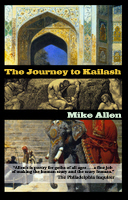
Mike Allen has been, for nine years the editor of the biannual poetry journal Mythic Delirium. He's also edited or co-edited several books, including The Alchemy of Stars (the anthology of all the poems which have won the Science Fiction Poetry Association's Rhysling Award) and the MYTHIC anthologies of fantasy poetry and fiction. He's published four books of poetry, and his latest, Strange Wisdoms of the Dead, was a Philadelphia Inquirer Editor's Choice selection. He's a former president of the Science Fiction Poetry Association and a three-time winner of the Rhysling Award.His newest book, The Journey to Kailash, was published by Norilana Books as part of their Curiosities series. It is a three section book, each section about 30-40 pages. These three sections create a vivid journey for the reader through fantastic, often dark, stories.
The first section, "misfortune when he leaves: his shadows grow to meet her," seems very fantasy oriented. For example, the primary and eponymous poem of the collection begins
When Ganesh marries my mother,
I am 18, my own man
in the eyes of the law; but barely a zygote
in his eyes. He calls me spermling
the first time we speak in private;
the poem continues through a step-father/son relationship, and journeys into the territory of what it might mean, in this day and age, to marry a god.
Perhaps my favorite poem of the section is "Giving Back to the Muse," which is a lesson in sacrifice, or love, or something else, perhaps... It begins:
She wears a necklace of knives and eyes,
a sash sewn from flags and faces,
boots welded from bomb fragments,
a belt of hangman’s rope.
and gets even more juicy as the poem rolls forward.
The second section of The Journey to Kailash is "as the stars die, sad whispers warm the breeze," which seems very science fiction oriented. In "Manifest Density," we colonize the universe, bringing "Slurpee cups and no U-turns" to the brink of extinction. In "Black Holes Hold Their Breath," the speaker responds to a comment made by Stephen Hawking concerning black holes and time travel. "retrovirus" takes iconic figures and creates a nightmarish world of 1950's imagery. However, the uninitiated reader should not be afraid. Even though these poems are scientific in nature, and even though Allen drops a few S-bombs (science words that need googling), he keeps the poems extremely accessible, and any reader will be able to connect with the characters and smile or shudder along with the stories told.
The third section of the book is "staring down the sun: the end he never sees," is a more surrealistic series, the majority of which is focused on artists, the worlds they created in their art and the events that inspired them, from "Escher's Bed" to "Klee's Garden" to "O'Keefe's Bones." This is one of the more difficult sections of the book, not in terms of accessibility, but in terms of tone and heaviness. This is a very resonant section, and readers should absorb Allen's words slowly if they are to survive.
The Journey to Kailash is not the book for every reader, certainly. There are elements of the fantastic, elements of science fiction, even elements of surrealism all rubbing against each other. There are times when the disparity seems too great, and this becomes a collection of three chapbooks, but Allen manages to tie it all together, whether through a recurring image or the evocative mood of the poems. In this bitter season of negative degree weather, Mike Allen's The Journey to Kailash is a wonderful book to accompany a pot of tea before of a smoldering fire.
Sunday, January 11, 2009
Review: Amaze:The Cinquain Journal, 2007 Annual
Much has been writtenon this blog about haiku, what the definition of haiku is, the importance of haiku, the different interpretations of the form, etc. So much, in fact, that other short forms have been ignored, from the Japanese tanka to the Korean sijo to the oft ignored American cinquain. Adelaide Crapsey, inspired like many Imagists by Japanese poetry, came up with an American form that followed a specific syllable count. Her form, the American cinquain, a 22-syllable form, falls syllabically between a haiku (17) and a tanka (31). A few of Crapsey's cinquains, which were written between 1911 and 1913, are even considered tanka, albiet the more westernized version of the form sans syllabic count.
Ultimately, a cinquain is a five line poem which follows a syllabic count of 2/4/6/8/2. Crapsey herself deviated from the form at times, but for the most part, western poets follow this syllabic count quite strictly. In addition, many cinquains, despite being based on Japanese untitled forms, are titled like other western poems.
Since 2002, Deborah P. Kolodji has been editing Amaze: The Cinquain Journal, an on-line poetry jouranl. For two years, she has been collecting the poems and essays from each year into a large printed publication to help promote the form and the magazine.
This years publication is a great display of the potential of the form. Many poets have been gathered together, all exploring what can be done with such a deceptively simple form.
A few echo the sensibilities of tanka, with two sections juxtaposed and resonating against each other:
Desert Orbs
full moon
rising above
the silhouetted hills:
a pie pan flung by the roadside,
shining
--Billie Dee
Campus Coffee Shop
He raves
on Kant's ideals--
intrepid robins peck
the crumbs of conversation strewn
their way.
--Anya Corke
Long ago
Warriors
clash in the sun,
their silver blades flashing--
on the ground, the fallen cherry
blossoms.
--Terra Martin
Others are lighter, even humorous, scenes and funny observations:
When The Sun Goes Down
Trolling
the local bars
she flirts with every man--
it's just another tequila
sunrise.
--John Daleiden
At the Ready
Whistling
a tune, his face
contorts with cheer: the notes
from puckered lips prepared to blow ...
a kiss.
--Mary E. Moore
Astronomy Puppy
I watch
the moon; he barks.
I note craters; he digs.
I pack my telescope; he sits
tangled
--Lee A. Spain
Some are poignant metaphors:
Apprenticed
Our earth,
frail boat, drifts on
a vast ocean of sky
while we hold tight and try to learn
to row.
--Ross Plovnick
Farewell at Dusk
droplets
flow in circles
that blossom on my skin;
I am the moon, trapped in your
orbit
--Trish Shields
Also included are various longer forms based on the cinquain, mirror pieces as well as cinquain crowns and series:
Goddess of Beauty
Tonight
I saw her pluck
a copper coin from clouds
of pink above a purple sea,
drop it
gently
in a slot between two islands.
Trails of silver handprints
were waving dusk
goodbye.
--Susan Constable
Flying the Jolly Roger
Swaying,
wooden boards creak,
steel drawn, cannons blazing --
boarding pikes and grappling irons
ready.
Matchlocks
fire, lead balls tear,
sailors a'twitch, dying --
sabres reap a fleshy harvest
of blood.
Awash
with sticky red,
gore-soaked decks slick with death --
ripping evil overwhelming,
swarming.
Crewmen
become corpses,
passengers become slaves --
life measured in gold and silver
plunder.
Treasure
secured and stowed,
merchant ship smokes and burns --
in the breeze, the skull and crossbones
flutter.
--Paul Ingrassia
Poet Without Borders
(a crown cinquain)
After
the final shot
silence lies within words -
you reach through it, a bloody mute
stillness.
The words,
half-dead, fractured
lie - blackened or bloated
or buried alive in snow's deep
whiteness.
On the
empty pages
of the lost words, you search
finding other tongues, lover tongues -
meanings.
Poet
without borders
you resurrect dead words,
breathe life into barely living
language.
In the
quest for language
we yearn for words of peace,
of love, and dancing, we hold hands,
singing.
--Hortensia Anderson
Also included are essays concerning the cinquain form, including the well researched "The Roots of the American Cinquain" by Judith Ecker Budreau.
This is an excellent collection which shows the potential for this oft ignored and misunderstood form. For any poet interested in short, non-narrative verse (especially those who enjoy counting syllables), this collection makes an important read.
Monday, January 5, 2009
Review
“breaths”
by Joshua Gage
Cover Photo by Rosann Gage; Cover Design by Heidi Della Pesca
(vanZeno Press, www.vanzenopress.com)
In “breaths,”
Modern haiku writers strive to place their images and ideas into profound juxtapositions such that the poem implies more and, in fact, becomes more than the sum of its parts. Gage is one of only a very few with the ability to do this exceptionally well. Consider the following excerpt:
our son in Iraq
wasps build a nest
in the mailbox
The depth of the book is further enhanced by the inclusion of recurring themes and images viewed from differing perspectives. Love and sensuality, the moon, the lake (Erie in this case, although not specifically named), the uneasy merging of civilization and the wild are woven throughout and viewed from fresh angles in the same way filmmaker might add depth by shooting his scenes from alternate points of view.
“breaths” is filled with original images but also permeated with moments to which nearly everyone can relate. Consider “the sound of rush hour / a deer grazes / in my front yard” for example.
This is an essential book of keen insights that reveals additional layers with each rereading and it comes very highly recommended.
Reviewed by J.E. Stanley. Tuesday, December 2, 2008
Dog - Ku
Neverunderestimate the value of being clever.
Now I am not exactly certain why – but the subject of haikus seems to get everyone going around here. It’s like bringing up politics at the thanksgiving dinner table – everyone has an opinion and there just may be some mashed potatoes headed for the side of your melon if you’re not diplomatic enough.
Well, a friend of mine in Ann Arbor Steve Marsh (they used to have a football team attached to a school up there somewhere I think) has pegged the meter on the cleverness scale by publishing a book of Dog Ku. Haiku (at least the 5-7-5 variety – you guys can battle this one out) written by dogs.
So are these ditties sanctioned by the all supreme Haiku Arbitration Institute of the Known Universe and adjacent dimensions? Probably not. But they are clever and fun and definitely possess that “why didn’t I think of this” envy that sprouts whenever we are gob smacked with an obviously good idea.
Now I happen to know if you deal directly with Mr. Marsh – he can get you a discount along with a signed copy. E-mail him at: stevedmarsh@charter.net
Tell him I sent ya.
Dog-ku: Very Clever Haikus Cleverly Written by Very Clever Dogs
by Steve D. Marsh
Publisher: St. Martin's Press
Pub. Date: October 2008
ISBN-13: 9780312377144
Here’s a couple Dog Kus for ya:
All day I sniff butts.
I come home to celebrate
By kissing your face
And
The paperboy comes.
He wants to murder us all!
Bark! Bark! Bark! Bark!
A great stocking stuffer for that near clinical dog lover on your list.
Tuesday, October 21, 2008
Book Review: Dreams and Nightmares 81
It should be no suprise, then, that Kopaska-Merkel is also an incredible editor. He was for six years the editor of Star*Line, the journal of the Science Fiction Poetry Association. He currently is the editor and publisher of Dreams and Nightmares, which is now in its 81st issue.
Issue of 81 represents all genres of speculative literature, from horror to science fiction to fantasy and any melding or blend of the above, all of it worth reading. For example, the cover poem, a wrap around color collage of word and image by Steve Cooper, blends imagery from the CERN Hadron Collider, the Mayan Calendar and a suicidal protagonist. Between the covers, readers are presented with a mythopoetic castle by David R. Sullivan, a used android wife by Deborah P. Kolodji, and instructions for the apocalypse from Bruce Boston. Readers are also treated with short scifaiku, horrorku and tanka from Deborah P. Kolodji, assu and g smorpian, as well as illustrations by Randy Moore, Anne Stone, and Jeff Creek. There are short prose pieces from Nicholas Ozment and Ruth Berman, and a three page religious science fiction poem by Kendall Evans and Samantha Henderson. In these 20 short pages there are many dreams, many nightmares, and something to appeal to every reader.
What makes this magazine even more attractive is the incredibe price--$4!!! A poet can sell a $5 chapbook, buy a copy of Dreams and Nightmares, and have half a cup of coffee left in change! Also, Kopaska-Merkel is selling lifetime subscriptions--LIFETIME--for $90, which includes any available back issues, which I assume would include issue 81. This is a great deal, and offers up a lifetime of, from what the small sampling in issue 81 presents, great speculative reading.
Tuesday, September 23, 2008
Book Review: The Flayed Man and Other Poems by Phillip A. Ellis
In his newest book, The Flayed Man and Other Poems, available on Gothic Press, Philip A. Ellis seems to be of two write from two distinct voices.