Saturday, September 28, 2013

Thinking about having sex? Call from Tolstoy On Line 5

tolstoylarge

Forget condoms, contraceptive pills and chlamydia, and turn instead to Chekhov, Tolstoy and Gogol. That is the message from Russia's children's ombudsman, Pavel Astakhov, who has opposed the introduction of sex education to schools and says young Russians can learn everything they need to know about love and sex from Russian literature.


Just in time, all of Tolstoy’s works are going online. “We wanted to come up with an official website that will contain academically justified information,” explains his great-great-granddaughter. The work on the site will have been triple-proofed by more than three thousand volunteers from some forty-nine countries.


Roll up, roll up all you ‘mangie rascals, shiteabed scoundrels, drunken roysters, slie knaves, drowsie loiterers, slapsauce fellows, slabberdegullion druggels, lubbardly lowts … fondling fops, base lowns, saucie coxcombs, idle lusks, scoffing Braggards, noddie meacocks, blockish grutnols, doddi-poljolt-heads, jobbernol goosecaps, foolish loggerheads, slutch calf-lollies, grouthead gnat-snappers, lob-dotterels, gaping changelings, codshead loobies, woodcock slangams, ninnie-hammer flycatchers, noddiepeak simpletons, turdie gut, shitten shepherds, and other suchlike defamatory epithets


 Borges never considered how many millions of light years any poor soul would need to travel in order to find so much as a page worth reading


How Delmore Schwartz Saved My Life...Or at least kept Lou Reed from punching me at a dinner party


 They are mad for metamorphosis.
 "I have nothing to say
and I am saying it
and that is poetry
as I needed it"
      - John Cage

Sunday, September 22, 2013

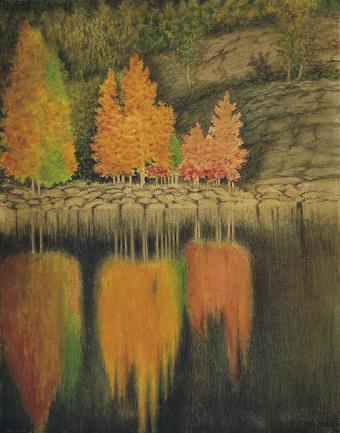
Autumn--

photo by GL
“Autumn” by R.S. Thomas
 Happy the leaves
burnishing their own
downfall. Life dances
upon life’s grave.
It is we who inject
sadness into the migrant’s
cry. We are so long
in dying – time granted
to discover a purpose
in our decay? Could
we be cut open,
would there be more than
the saw’s wound, all
humanity’s rings widening
only toward ageing?
To creep in for shelter
under the bone’s tree
is to be charred by time’s
lightning stroke. The leaves
fall variously as do thought
to reveal the bareness
of the mind’s landscape
through which we must press on
towards the openness of its horizons.


Mikhail Kalashnikov, the Russian soldier who invented one of history’s most fearsome killing machines — “the AK-47 assault rifle, beloved of guerrillas around the world” — announced at a Kremlin reception in honor of his 90th birthday that he really wanted to be a poet.


Scorched Maps

I took a trip to Ukraine. It was June.
I waded in the fields, all full of dust
and pollen in the air. I searched, but those
I loved had disappeared below the ground,

deeper than decades of ants. I asked
about them everywhere, but grass and leaves
have been growing, bees swarming. So I lay down,
face to the ground, and said this incantation—

you can come out, it’s over. And the ground,
and moles and earthworms in it, shifted, shook,
kingdoms of ants came crawling, bees began
to fly from everywhere. I said come out,

I spoke directly to the ground and felt
the field grow vast and wild around my head.

Tomasz Rozycki’s poem Scorched Maps


Wednesday, September 18, 2013

Ohio Poetry Association presents Bruce Weigl in Oberlin 9/21

The Ohio Poetry Association's quarterly meeting comes north to be held this Saturday at the Oberlin Public Library.  Meeting at 10 a.m.  Reading and workshop at 1 p.m.  From the press release:

"For our fall quarterly program we are very excited and honored to welcome Lorain, Ohio native Bruce Weigl. Currently Distinguished Professor at Lorain County Community College, Bruce has twice been nominated for the Pulitzer Prize, most recently for The Abundance of Nothing (2012).

"In all, Weigl is the author of more than a dozen books of poetry, several collections of critical essays, and a best-selling prose memoir, The Circle of Hanh (2000). A veteran of the Vietnam War, Weigl’s early work engages directly with the horror of his experience of war, while more recent work explores themes of family and childhood. Weigl writes in his memoir: "The paradox of my life as a writer is that the war ruined my life and in return gave me my voice."

"Weigl earned his BA at Oberlin College, his MA at the University of New Hampshire, and his PhD at the University of Utah."


www.ohiopoetryassn.org

Saturday, September 14, 2013

Science Versus Poetry!


Well, it's no secret that I write a lot of science fiction poetry, and even straight-out science poetry.

The American Scholar says:
"Science versus Poetry: Worlds apart, and yet alike in many ways"
"They are old enemies, or else they are old lovers. The poet Albert Goldbarth writes, 'Perhaps the arts and the sciences have never slept together without one eye kept warily open.'   However warily, though, they have slept together. There are points of connection, even intimacy...."
And in the American Scientist, Anna Lena Phillips says something similar:
"Poetry and science go way back: Over the centuries, they have occasionally gotten together, like old friends who find themselves in the same city and meet up for tea, only to head home the next day and lose touch again."

On the other hand, poet Robert Kelly has this to say:
Science explains nothing
but holds all together as many things as it can count...
science is the same as poetry
only it uses the wrong words

 and the poetry foundation gives you
Ten Poems to Get You Through Science Class This Year


Some years ago, I wrote an essay "Science, Fiction, Poetry," as an introduction to a poetry anthology called Mindsparks. It has some more of my thoughts, at the time, about how science is like and unlike poetry:

Sunday, September 8, 2013

Poetry Superhighway Poet of the Week


Along with Romanian poet Marius Surleac, I was selected as poet of the week on Poetry SuperHighway this week.

The mission of the Poetry Super Highway is "to expose as many people to as many other people's poetry as possible."


And for those poets who like entering into contests, I'll point out that Poetry SuperHighway has an upcoming poetry contest with deadline coming up on October 5.  It is a fee contest-- but the fee is pretty nominal (one dollar!), and all the money collected goes to the prizes, so they're not making a profit off the poets.

Friday, September 6, 2013

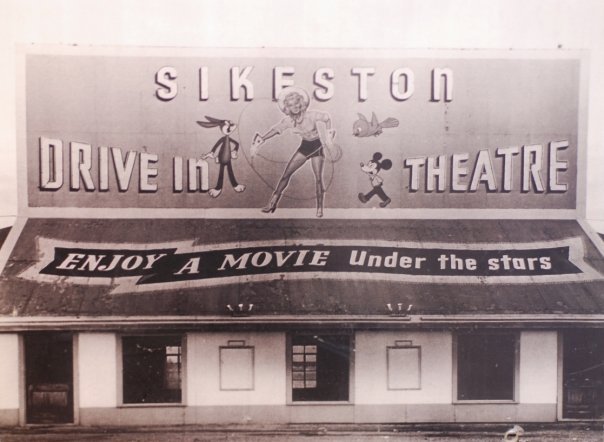
Poetry for the Age of American Decline

DRIVE-IN.jpg
Poetry can provide solace. It can also remind people to quit freaking out. Poems selected for Congress, nervous shoppers, Maureen Dowd, and the President of the United States.
Poetry for the Age of American Decline

People read their favorite short poems into an answering machine for a project Verse By Voice.  Make sure to listen to novelist Zadie Smith reading Frank O'Hara's Animals and Laura Demanski reading Gerard Manley Hopkins' Spring and Fall. Note: we didn't include what is surely not Christopher Walken reading EE Cummings, but that's worth a listen too.
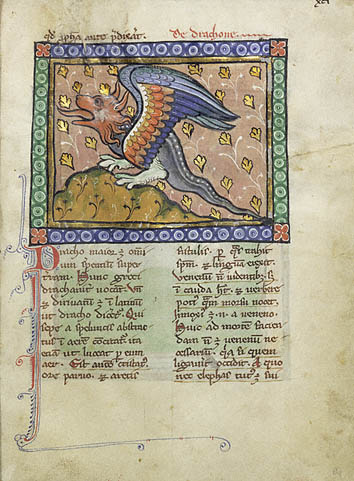
"A Dragon," 1270
"A dragon," unknown illuminator
Franco-Flemish, about 1270
Tempera colors and gold leaf on parchment
Courtesy Getty collection
The Unseen Bestiary is an attempt by artist Lindsey Carr to produce a set of work which depicts Flora & Fauna the artist has never seen.
The Unicorn (English, 12th century)from the Aberdeen Bestiary,


Friday, August 30, 2013

Try to be Anything Else


First, try to be something, anything, else. A movie star/astronaut. A movie star/missionary. A movie star/kindergarten teacher. President of the World. Fail miserably. It is best if you fail at an early age--say, fourteen. Early, critical disillusionment is necessary so that at so that at fifteen you can write long haiku sequences about thwarted desire..
  -- How to Become a Writer -- Lorrie Moore


Holden’s History of the United States
R.I.P.  J. D. Salinger (1919–2010) & Howard Zinn (1922–2010)


Sunday, August 25, 2013

Nine Things Writers Can Learn from (ahem) Science


At Ploughshares, Tasha Golden tells us Nine Things Writers Can Learn from (ahem) Science.

Now, if I were picking one thing that writers (and everybody) could learn from science, I'd say it is that
It's a big world out there-- a big universe-- but there is simplicity hidden inside apparent complexity, and complexity evolving out from apparent simplicity.

And, maybe after that,
And no matter how much you learn, there's always more.

But Tasha has some other advice. Check it out!


Friday, August 16, 2013

Haiku North America, 8/16 continued


Senryu: Refreshing the Human Spirit  by Sunny Seki & Judy Seki

While Judy was indeed present at this panel, she seemed to serve more as introducer for Sunny than co-presenter. Sunny was the main speaker on the topic of senryu this afternoon.

Sunny Seki began by comparing Basho to Senryu, making the following points

Matsuo Basho


  • ·       High class (Former Samurai, Zen Buddhist)
  • ·       Focused poems on Nature
  • ·       Literary Style
  • ·       Emphasized the Four Seasons
  • ·       Philosophical, Admiration, eternal, etc.


Karai Senryu


  • ·       City manager, Literary Promoter – never wrote poems
  • ·       Focused on poems about Human Nature
  • ·       Conversational Style
  • ·       Emphasized the Human Predicament
  • ·       Humor, Cynicism, Parody, Satire, Irony, Politics, Society


Senryu didn’t travel like Basho, but stayed in the city. He was the city manager. Published senryu anthologies that were read by the common people. as opposed to Basho, who was part of an upper class literati.


Modern senryu is often based on contests, much like those Senryu himself ran. The editor or editors come up with a theme or topic, and people submit their poems. There is a long tradition of this, starting with Japanese immigrants in the 20th century, and Sunny Seki presented this history with many examples.

He explained that Japanese immigrants started to come to Seattle in the 20th century, and travelled South to LA.

As the ship rocks hard
I notice my neighbor saying
the same prayer

Seki explained that even during hardship, when they’re miserable, Japanese poets used senryu to look at the brighter side of life.

Japanese were not allowed to buy property until 1952, and so senryu like the following were written to capture life and explore human relationships with humor and irony.

I learned basic English
from my child
and then went out to find work


From the 1940s:

I am forced to polish apples
even though I have
a college diploma


From the Japanese internment camps during WWII:

lucky sage brush
growing
outside the fence


1950s, many Japanese in California became gardeners. The bulk of Seki’s talk focused on these senryu, which he translated from archives of gardener newspapers and publications:

The smell of fertilizer
no longer strange
to my wife


my husband’s sweaty laundry
tells me how hot
the day was

I expected a new job
but all he wanted
was directions

my wife waited for me
in front of the liquor store
because it was payday

One more payment to go...
my lawn mower
was stolen

Together
my lawn mower and I
built my sweet home

With my lawnmower
I made my offspring
grow into doctors

Seki ended his talk by advocating that writers explore and experiment with senryu. So, your assignment after you read this--write a senryu! ;)

Haiku North America, 8/16


Haiku and Healing

The Haiku and Healing Panel this morning featured Don Eulert, Angela Deodhar and Daniel Spurgeon.

Spurgeon began his comments by focusing on “being present.” As a Hospice worker, he discussed working with people who are dying, grieving, shifting to end of life care. As a practitioner of haiku, he argued that sensory connection is a way to become present. Connecting to his body and himself is a way to connect to this person or family.

Deodhar handed out a pamphlet of haibun, many of which dealt with using writing as a way to heal or served as her personal evidence of the power of writing to heal.

Eulert began with a  personal definition of haiku: “the way things come together in nature to give a momentary glimpse into the oneness of things, and the offness of things.” He argued for keeping the ego and personal out of haiku. As a teacher of therapists and psychologists, he said that he tried to urge them to “take the subjective out of the objective. If they can’t take their subjectivity out of the objective moment, they won’t be good healers.” He also urged us to remember that we were not talking about curing, but healing, which he defined as a restoration of harmony, balance and relationship.
When asked by Spurgeon, “How did being ill relate to your connection to your own body, and how did haiku help your awareness of that connection?” Deodhar responded “Just the act of putting it down was healing. In the ICU, see monitors, etc.—you’re very aware of your own body.”

When asked about his use of haiku and writing in therapy, Spurgeon responded “It’s very rare that I’ll ask a patient or family to write, rare that I’ll use haiku as intervention. My practice of haiku affects me, affects my way of being, and I bring that into the room—it affects the energy. When someone gets witnessed without agenda, but a clear slate of knowledge, it can be so connecting and healing.”

After Deodhar read her haibun, ““A Year Later,” Spurgeon brought up Issa’s haibun about his dead children. He discussed Joan Halifax, who wrote Being With Dying and presented the Dhrama Podcast “On Grief and Buddhism,” in which she argues that Issa is “opening the hand of grief.

Later, Spurgeon argued that haibun is particularly powerful for grief because “the prose allows you to go where ever you want. That part of us that wants to tell our story, over and over again, the prose offers a place for our voice to do whatever we need to do. Haiku asks for structure, for pointed observation. Haiku offers an opportunity to get present to this world. “

This was a very moving panel, and profound and energetic enough to go overtime. What I really enjoyed was how all the panelists connected haiku to the body, contemplatively as well as physically. It was a beautiful and engaging reminder of the power of writing.

Thursday, August 15, 2013

Haiku North America, 8/15


Were I any sort of poet, my experiences at Haiku North America (HNA) would be written in glorious haibun, and each and every reader would achieve enlightenment. I am a beginner, at best, and so you’ll have to read Basho’s Oku no Hosomichi. That being said, my thoughts of HNA, Thurdsay, August 15.

How Long Is a Moment by Michael Dylan Welch:
Welch’s presentation was based upon the idea that haiku should “capture a moment,” according to some scholars, editors and/or writers. He challenged this idea by presenting haiku with short time spans (possibly moments), long time spans, and no time span at all. All were published haiku, though, many by famous authors within the haiku world. Welch further challenged the idea of a “haiku moment,” by differentiating between a static moment and a dynamic moment. A static moment is one in which nothing externally happens, but the viewer, and in turn the reader, become aware of something. A dynamic moment is one in which there is a clear beginning and end, and is often based upon the use of a verb. There are haiku which are dynamic moments, haiku which are static moments, and haiku which are neither. Unfortunately, Welch’s discussion was cut short due to time constraints, and so further investigation wasn’t possible. I’ll try to hit up Michael sometime in the conference and ask him other questions that I have.

Kigo: The Scent of Haiku by Patricia Machmiller:
Machmiller’s paper was one long haibun which demonstrated, quite successfully, the various types of kigo available to English speakers. While I wish she would have explored various types of kigo, and possibly the difficulties with kigo in English, particularly those concerning regionality, her paper did, nonetheless, raise particular questions. How, in a globalized society, can kigo work? Consider, for example, various types of produce which once were relegated to a specific season, and are now available year round. Another question raised by an audience member concerned the change in season for a modern kigo. Certain kigo are associated with one specific season in Japan, and yet in modern times, with the adoption of a non-lunar calendar, occur in another season. For example, the Tanabata festival is a fall kigo, occurring on the seventh day of the seventh month. However, it now occurs on July 7th, which is clearly a summer kigo. Machmiller discussed the balance required, and the possibility of losing a section of one’s audience, when using one or other interpretations of the kigo “Tanabata”.  Machmiller recommended some excellent resources, among them Gabi Greve’s kigo database, and William J. Higginson’s “The Haiku Seasons.” As an advocate of chiboo kigo, I also recommend (and Greve touches upon this within the database) regionalized kigo. For example, “lake effect” or “lake effect snow” only occurs in a specific region within the United States, and thus serves as a Chiboo Kigo for the Great Lakes Region, and areas along Lake Erie in particular. More haiku with this kigo will add depth and resonance as they play off each other.

Cited...

The poet doesn't invent. He listens. ~Jean Cocteau